
Why Industrial Power Backup Is Different
A small office can tolerate a 30-second power interruption while UPS batteries carry the load. An industrial facility cannot. A sudden loss of power can:
- Destroy in-process batches (food, pharma, chemical)
- Trip motors and cause mechanical damage
- Create safety hazards in facilities with rotating equipment
- Trigger cascading failures in PLC-controlled systems
Industrial power backup must be engineered—not improvised.
The Three Layers of Industrial Power Security
### Layer 1: Uninterruptible Power Supply (UPS)
The UPS provides zero-interruption switchover for control systems, SCADA, computers, and safety interlocks. Target switchover time: <10 milliseconds. Runtime: 5–30 minutes (enough for generators to start and stabilise).
### Layer 2: Diesel Generator (Primary Backup)
A properly sized diesel generator carries the full facility load within 10–30 seconds of a mains failure. For industrial use, this means:
- Sizing: 100% of critical load + 50% headroom for surge
- Redundancy: N+1 configuration for critical facilities (two generators, either can carry full load)
- Fuel: Minimum 72-hour fuel storage onsite
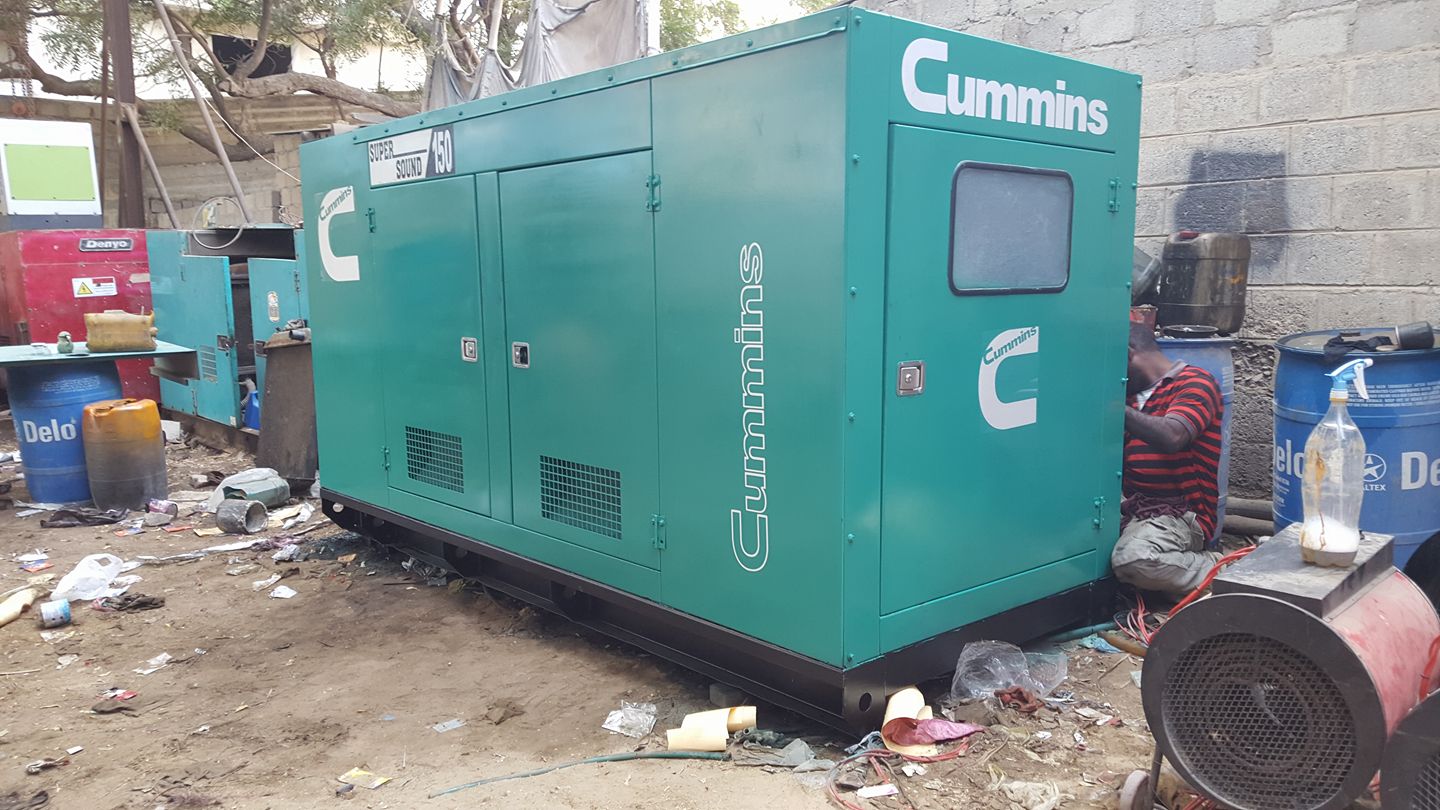
Aiwa Powers supplies 100–500 kVA diesel generators for industrial clients across Karachi and Sindh. For megawatt-scale requirements, we source on a project basis.
### Layer 3: Fuel Supply Contract
The generator is only as reliable as its fuel supply. Establish a fuel supply contract with a diesel supplier who can deliver within 24 hours, and maintain onsite storage for at least 72 hours at full-load consumption.
Automatic Transfer Switch (ATS) Configuration
An ATS monitors mains voltage and frequency. When mains power falls outside acceptable parameters, the ATS:
1. Sends a start signal to the generator 2. Waits for generator to reach stable voltage/frequency (typically 10–15 seconds) 3. Transfers load from mains to generator 4. When mains is restored and stable, transfers back and stops the generator
For critical facilities, a double-bus ATS ensures no load interruption during transfer.
Load Priority Scheduling
Not all loads are equally critical. Programme your ATS or generator controller to shed non-critical loads (HVAC, non-essential lighting) automatically if the generator approaches 90% capacity. This keeps critical processes running.
Preventive Maintenance Schedule
| Interval | Tasks |
|---|---|
| Weekly | Battery test, visual inspection, fuel level check |
| Monthly | Full load test (30 min), oil level, coolant level |
| Quarterly | Oil change, filter replacement, load bank test |
| Annually | Full engineer inspection, injector service, cooling system flush |
Aiwa Powers offers industrial maintenance contracts with guaranteed response times. Contact us to discuss a customised maintenance plan for your facility.
Case Study: Korangi Industrial Area Client
A garment factory in Korangi engaged Aiwa Powers in 2019 after losing a 500,000 PKR production batch to a surprise load shedding spike. We installed two 150 kVA generators in N+1 configuration with a dual-bus ATS. Three years later, the client has experienced zero production interruptions due to power failure.